Titanium vs Zirconium 702: Acetic Acid Service Selection
| Specification | ASTM B265 (Ti plate), B338 (Ti tube), B550 (Zr bar), B523 (Zr tube) |
|---|---|
| Applicable Standard | Titanium Gr2 (UNS R50400) vs Zirconium 702 (UNS R60702) |
| Material Condition | Acetic acid (CH3COOH), acetic anhydride, vinyl acetate production |
| Inspection & Packaging | Titanium below 200C clean acid; Zirconium above 200C or with contaminants |
| Reference Price | $14.99 |
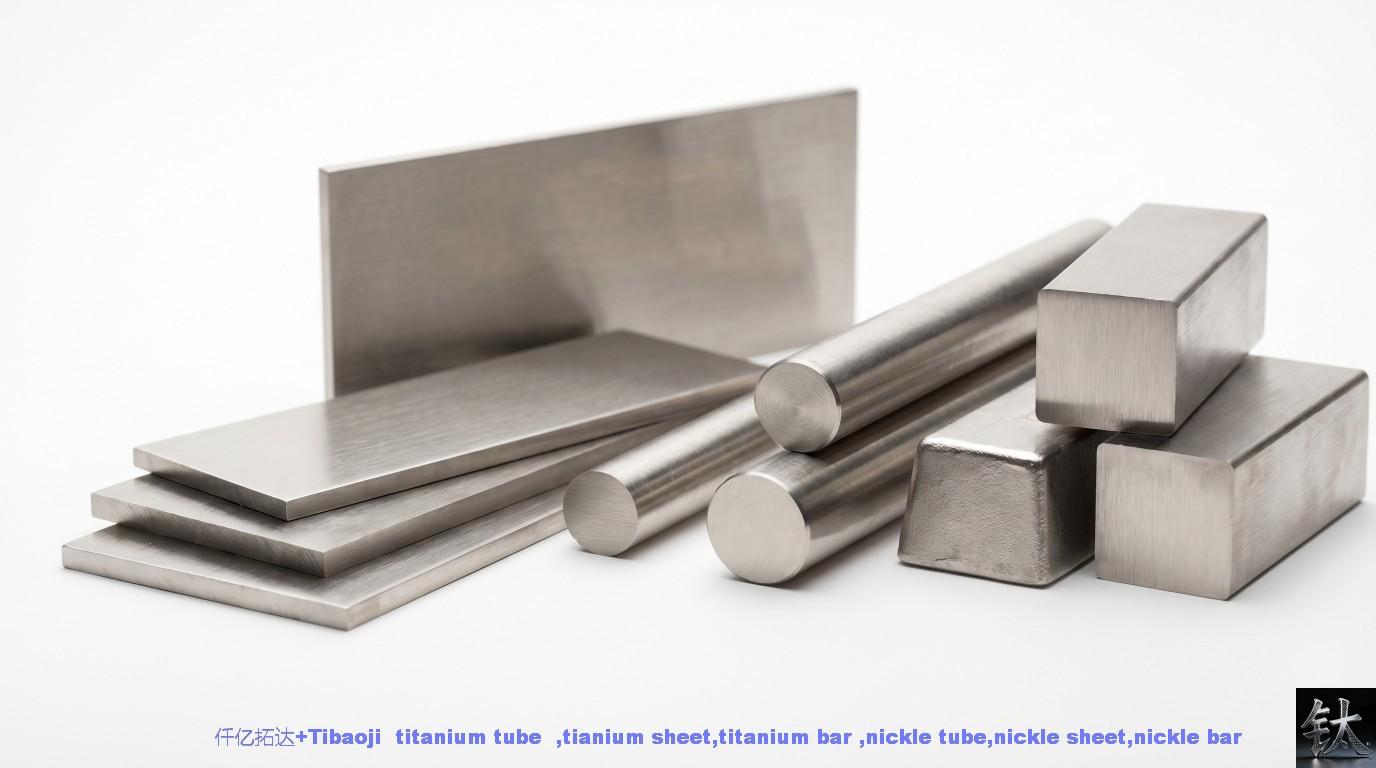
Product Description: Titanium Gr2 for acetic acid below 200C, Zirconium 702 (UNS R60702) for service above 200C or with formic acid and chloride contaminants. ASTM B265 B523 material selection guide.
Product Overview
| Item | Detail |
| Standards | ASTM B265 (Ti plate), B338 (Ti tube), B550 (Zr bar), B523 (Zr tube), B658 (Zr pipe) |
| Materials | Titanium Gr2 (UNS R50400) vs Zirconium 702 (UNS R60702) |
| Service | Acetic acid (CH3COOH), acetic anhydride, vinyl acetate production |
| Core distinction | TiO2 film breaks down above 200C in acetic acid; ZrO2 film remains stable. Ti and Zr cannot be directly welded. |
1. The Failure That Defines the Question
In 2020, a chemical plant in Shandong reported tube leakage in a titanium (Gr2) heat exchanger processing acetic acid at 210°C. The acid was "commercial grade" — 99.7% acetic acid with trace formic acid (0.1–0.3%) and chloride contamination (50–100 ppm). After 3 years of service, the tubes developed pinhole leaks at the tube-to-tube-sheet crevices.
The diagnosis: crevice corrosion. At 210°C, in the presence of formic acid and chloride contamination, the TiO2 passive film on Grade 2 titanium broke down in the tube-sheet expansion gaps. The mechanism is the same as in seawater — oxygen depletion, pH drop, chloride concentration — but accelerated by the organic acid environment and higher temperature.
The plant's response: replace the tube bundle with Zirconium 702 (UNS R60702). Zirconium forms a ZrO2 passive film that is thermodynamically more stable than TiO2 in hot acetic acid — it does not break down at 210°C, even with formic acid and chloride contamination. The cost: 4x the titanium bundle price. The result: 5 years and counting, no corrosion.
This case defines the central question: titanium and zirconium are both "corrosion-resistant" materials, but they are not interchangeable. The boundary is defined by temperature, acid purity, and contaminant level.
2. The Two Materials at a Glance
| Property | Titanium Gr2 | Zirconium 702 |
| UNS | R50400 | R60702 |
| Composition | CP titanium (Ti 99.2% min) | CP zirconium (Zr+Hf 99.2% min) |
| Passive film | TiO2 | ZrO2 |
| UTS (min) | 345 MPa | 379 MPa |
| Yield (min) | 275 MPa | 207 MPa |
| Density | 4.51 g/cm3 | 6.53 g/cm3 |
| Cost index (vs Ti) | 1.0 | 3–5x per kg |
| Acetic acid limit | ~200°C (clean) | Boiling, all concentrations |
Zirconium 702 is commercially pure zirconium. Its passive film (ZrO2) is more stable than TiO2 in many aggressive acid environments — particularly acetic acid, hydrochloric acid, and sulfuric acid at elevated temperatures. The corrosion rate of Zr702 in boiling glacial acetic acid is below 0.001 mm/year.
3. Why Acetic Acid Attacks Titanium Above 200°C
Titanium's TiO2 passive film is stable in acetic acid at moderate temperatures. Below 200°C, in clean acetic acid (no formic acid, no chloride), Grade 2 titanium performs well — corrosion rates are below 0.01 mm/year. The problem arises in the conditions that real plants encounter:
- Temperature above 200°C: The TiO2 film becomes less stable. In crevice geometries (tube-sheet, gaskets), the film breakdown threshold drops.
- Formic acid contamination: Commercial acetic acid typically contains 0.1–0.5% formic acid. Formic acid is a reducing acid that locally depletes oxygen and lowers pH in crevices, accelerating TiO2 breakdown.
- Chloride contamination: Even trace chlorides (10–100 ppm) in acetic acid concentrate in crevices and accelerate passive film breakdown.
- Acetic anhydride: In acetic anhydride service (common in vinyl acetate production), water activity is very low — the TiO2 film cannot self-repair because there is insufficient water for repassivation.
The mechanism is the same as in seawater: crevice geometry → oxygen depletion → pH drop → chloride concentration → TiO2 breakdown → galvanic acceleration. The difference is the temperature threshold — in pure acetic acid, the threshold is ~200°C; with contaminants, it drops to ~150°C.
4. Where Titanium Is the Correct Choice
Titanium (Gr2, or Gr7 for crevice zones) is the correct material for:
- Acetic acid service below 200°C with clean acid (no formic acid, no chloride)
- Acetic acid storage and transport at ambient temperature
- Acetic acid concentration from 30% to glacial at moderate temperature
- Heat exchangers in clean acetic acid service below 150°C
- Piping and vessels in acetic acid plants below 200°C
In these conditions, titanium's TiO2 film is stable and self-healing. Grade 2 is the economical choice for the bulk of the equipment. Grade 7 (Ti-0.15Pd) should be specified for crevice zones above 100°C, following the same zonal approach as in seawater service.
5. Where Titanium Fails
Titanium is at risk in:
- Acetic acid service above 200°C (continuous) or 150°C (with formic acid/chloride contamination)
- Tube-to-tube-sheet crevices in hot acetic acid
- Acetic anhydride service (low water activity prevents repassivation)
- Service with chloride contamination above 50 ppm
- Boiling glacial acetic acid
Key point: The failure is crevice corrosion — same as in seawater, but the threshold temperature is lower because organic acid contamination accelerates the mechanism. The failure is insidious: the tube body looks fine, the first sign is a pinhole leak at the tube-sheet joint. Hydrogen embrittlement is also a risk: titanium absorbs hydrogen in reducing acid environments, forming brittle titanium hydride. Zirconium does not suffer this mechanism.
6. Where Zirconium Earns Its Premium
Zirconium 702 is the correct material for:
- Acetic acid service above 200°C
- Acetic acid service with formic acid or chloride contamination above 150°C
- Acetic anhydride service (any temperature — ZrO2 does not need water for stability)
- Boiling glacial acetic acid
- High-temperature section of acetic acid concentrators
- Critical heat exchangers where failure consequences are severe
The ZrO2 passive film on zirconium is thermodynamically more stable than TiO2 in hot acetic acid. It does not break down at 210°C, even with formic acid and chloride contamination. Zirconium is essentially immune to acetic acid corrosion at all practical temperatures and concentrations. Additionally, zirconium does not absorb hydrogen in reducing acid environments, eliminating the hydrogen embrittlement risk that affects titanium.
7. Temperature and Contaminant Service Map
| Temp | Acid condition | Material | Reason |
| Below 100°C | Any acetic acid | Ti Gr2 | TiO2 stable, economical |
| 100–200°C | Clean glacial AcOH | Ti Gr2 (Gr7 for crevices) | TiO2 stable, manage crevice risk |
| 100–200°C | AcOH + formic/chloride | Ti Gr7 or Zr 702 | TiO2 at risk in crevices with contaminants |
| Above 200°C | Clean glacial AcOH | Zr 702 | TiO2 breakdown threshold |
| Above 200°C | AcOH + any contaminant | Zr 702 | No risk with ZrO2 |
| Any temp | Acetic anhydride | Zr 702 | TiO2 cannot repassivate (no water) |
Note: "Clean" acetic acid means pharmaceutical or synthetic grade with formic acid below 0.05% and chloride below 10 ppm. "Commercial" acetic acid typically has 0.1–0.3% formic acid and 50–100 ppm chloride — this is the real-world baseline for material selection.
8. Cost Economics
Zirconium 702 carries a 3–5x premium over titanium Gr2 on a per-kilogram basis. But the density difference matters: zirconium is 6.53 g/cm3 vs titanium 4.51 g/cm3 — a zirconium tube of the same dimensions weighs 45% more than a titanium tube. The material cost ratio for a tube bundle is:
Cost ratio = (Zr price/kg ÷ Ti price/kg) × (Zr density ÷ Ti density) = (3–5) × (6.53 ÷ 4.51) = 4.3–7.2x
For a heat exchanger tube bundle, the zirconium option costs 4–7x the titanium option. But:
- A titanium bundle that fails after 3 years costs: initial cost + replacement cost + 3 years of unplanned shutdown risk
- A zirconium bundle that runs 15+ years costs: initial cost + routine maintenance
For high-temperature or contaminated acetic acid service, the zirconium premium is justified by:
- Eliminating crevice corrosion risk
- Eliminating hydrogen embrittlement risk (titanium absorbs hydrogen in reducing acid, zirconium does not)
- Extending service life from 3–5 years to 15–20+ years
Conversely, specifying zirconium for the entire system — including the 80% of components that operate below 200°C in clean acid — pays for a premium that is not needed. The material boundary approach (Ti below, Zr above) is the correct economic and engineering answer.
9. Engineering the Material Boundary
The boundary between titanium and zirconium is defined by the process conditions:
- Heat exchanger: Use Ti for the low-temperature section (below 200°C, clean acid) and Zr for the high-temperature section (above 200°C, or with contaminants). The transition is a flange joint or a bimetallic transition piece.
- Distillation column: Use Ti for the lower-temperature trays and Zr for the reboiler section (highest temperature).
- Piping: Ti piping for transport and storage; Zr piping for the hot section.
- Vessels: Ti-lined steel vessel for storage; Zr-lined steel vessel for the reactor/heater.
The material boundary should be documented on the P&ID and verified on MTRs for each component. A common procurement error is to specify "corrosion-resistant alloy" or "CRA" on the material order — this is ambiguous and defaults to the cheaper option (titanium), which may be wrong for the high-temperature zone.
10. Fabrication
: Welding and Forming
Titanium and zirconium have similar fabrication characteristics but critical differences:
Titanium welding: TIG (GTAW) with ERTi-2 filler. Standard shielding: torch + trailing + root purge (argon). No preheat; interpass below 200°C. Post-weld: no heat treatment required.
Zirconium welding: TIG (GTAW) with ERZr-2 filler (AWS A5.24). Shielding requirements are MORE stringent than titanium: zirconium is more reactive with oxygen and nitrogen at elevated temperatures. Triple shielding (torch + trailing + root purge) is mandatory; even brief atmospheric exposure during welding causes oxidation discoloration and property degradation. Cleanliness is critical: all surfaces within 25 mm of the weld must be degreased and pickled before welding. No preheat; interpass below 150°C. Post-weld: light pickling to remove oxidation tint.
Bimetallic Ti/Zr welding — NOT recommended. Titanium and zirconium form brittle intermetallic compounds at the weld interface. The transition between Ti and Zr should be a flange joint, not a direct weld. If a weld transition is unavoidable, use an explosively bonded Ti/Zr clad transition piece with Ti-to-Ti and Zr-to-Zr welds on either side.
Forming: Both materials have good cold formability. Zirconium work-hardens more rapidly than titanium, requiring more intermediate annealing in deep forming operations.
11. Procurement Checklist
- Specify material by zone: "Titanium Gr2 for service below 200°C, Zirconium 702 for service above 200°C" — not "corrosion-resistant alloy" generically
- Require UNS designation: R50400 for Ti Gr2, R60702 for Zr 702
- Require full chemistry: Zr 702 must show Zr+Hf 99.2% min, with Hf content listed separately (Hf is a natural companion to Zr in ore; some specs limit Hf to 4.5%)
- For Zr tubing: Require ASTM B523 (seamless) or B705 (welded) compliance; require hydrotest and eddy current records
- Verify weld procedure: WPS/PQR per ASME Section IX; for zirconium, verify shielding gas purity (Grade S argon, below 5 ppm O2) and trailing shield coverage
- Do not accept "Zr" without UNS: "Zirconium" without UNS designation may be Zr705 (Zr-2.5Nb, different properties) or even Zr-2 alloy (nuclear grade, different chemistry)
- For bimetallic transitions: Use explosively bonded Ti/Zr clad transition pieces, not direct welds
- Do not substitute Ti for Zr above 200°C to save cost — the cost saving is 4–7x on material, but the failure cost is 3–5 years of service life lost
12. FAQ
Q1: What is the temperature limit for titanium in acetic acid service?
Approximately 200°C in clean glacial acetic acid. With formic acid contamination above 0.1% or chloride contamination above 50 ppm, the limit drops to approximately 150°C. Above these thresholds, specify zirconium.
Q2: What is Zirconium 702?
Zirconium 702 (UNS R60702) is commercially pure zirconium, the most widely used grade for chemical processing. It forms a highly stable ZrO2 passive film that resists acetic acid, hydrochloric acid, sulfuric acid, and other aggressive media at temperatures where titanium fails.
Q3: Can titanium and zirconium be welded together?
No. Direct Ti-to-Zr welding produces brittle intermetallic compounds at the weld interface. Use a flange joint or an explosively bonded Ti/Zr clad transition piece with Ti-to-Ti and Zr-to-Zr welds on either side.
Q4: How much more expensive is zirconium than titanium?
On a per-kilogram basis, 3–5x. Accounting for the density difference (Zr is 45% heavier than Ti), the material cost for a tube bundle is 4–7x. For high-temperature or contaminated acetic acid service, this premium is justified by eliminating corrosion and extending service life from 3–5 years to 15–20+ years.
Q5: What ASTM specifications apply to zirconium 702?
B550 (bar and wire), B523 (seamless tube), B705 (welded tube), B658 (seamless pipe), B553 (welded pipe). All list Zr 702 as UNS R60702. For zirconium plate, ASTM B550 covers bar and wire; for flat-rolled products, refer to ASTM B633 or the manufacturer's certified plate specification.
Q6: Why does titanium fail in acetic anhydride?
Acetic anhydride has very low water activity. Titanium's TiO2 passive film requires water for self-repair (repassivation). In anhydride service, any mechanical damage to the film cannot be repassivated, and the film progressively degrades. Zirconium's ZrO2 film is stable even without water, making it the correct choice for anhydride service.
Q7: How do I verify a supplier's Zirconium 702 is genuine?
Require an MTR listing UNS R60702 with full chemistry (Zr+Hf 99.2% min, Hf content listed, C below 0.05%, N below 0.025%, O below 0.16%). Cross-check with XRF spectrometry if the lot is large. "Zirconium" without UNS designation may be Zr705 (Zr-2.5Nb, different properties) or Zr-2 nuclear grade with different corrosion behavior.
Summary: When to Use Which
- Below 200°C, clean acetic acid: Titanium Gr2 (Gr7 for crevice zones above 100°C)
- Above 200°C, or with formic acid/chloride contamination: Zirconium 702
- Acetic anhydride service (any temperature): Zirconium 702
- Boiling glacial acetic acid: Zirconium 702
- Material transition: Flange joint or explosively bonded Ti/Zr clad transition (not direct weld)
- Cost: Zr is 4–7x Ti per tube bundle; justified by 3–4x longer service life
- Always specify UNS: R50400 for Ti Gr2, R60702 for Zr 702
Tell us your requirement — grade, size and quantity. We reply within 24 hours.
Prefer chat? WhatsApp +86 188 2967 9311 or email sales@sxqytd.com.
- Titanium Price Today (23 Oct 2026): Plate, Tube, Rod & Wire
- Read titanium wire and titanium alloy wire: diameter classification
- Titanium wire: from brand selection to manufacturing process (2026 r
- Read titanium tube and titanium alloy tube: OD classification + comm
- Titanium pipe knowledge·tee + reducer selection 5 steps
Contact Person: Wang Xiaoning
Tel: +86-917-355-7966
Email: sales@sxqytd.com
WhatsApp: +86 188 2967 9311
Company: Shaanxi Qianyi Tuoda Technology Co., Ltd
Address: Floor 4, Building 4, No. 188 Gaoxin Avenue, High-tech Zone, Baoji City, Shaanxi Province, China