Monel 400 vs Inconel 600/625: Which Nickel Alloy to Specify
| Specification | N04400 / N06600 / N06625 |
|---|---|
| Applicable Standard | Monel 400 / Inconel 600 / 625 |
| Material Condition | nickel alloy selection |
| Inspection & Packaging | ASTM B127 / B168 / B443 |
| Reference Price | $50.00 – $70.00 |
Product Description: Monel 400 (Ni-Cu) beats Inconel 600/625 in seawater, HF and cost; Inconel wins on heat and strength. ASTM grades, 8 failure modes, when to pick each.(149/160 ✓)
Product Overview
Monel 400 vs Inconel 600/625: Which Nickel Alloy to Specify
If you remember one number from this page: Monel 400 costs roughly 60–70 percent of Inconel 600 on a weight basis, yet beats it in seawater, hydrofluoric acid and reducing acid service — while Inconel 600 and 625 win only where load or heat dominate. The practical rule: pick Monel 400 (N04400) for corrosion-only duty (seawater, brine, HF, caustic, reducing acids); pick Inconel 625 (N06625) when you also need high strength or stagnant-seawater resistance; pick Inconel 600 (N06600) for furnace and high-temperature oxidation above about 540 °C. Both families are immune to chloride stress-corrosion cracking — that is why both displace stainless in marine and chemical service. Read the At a Glance table, then the failure-mode section before you write the specification.
At a Glance: Monel 400 vs Inconel 600 vs Inconel 625
| Property | Monel 400 (N04400) | Inconel 600 (N06600) | Inconel 625 (N06625) |
|---|---|---|---|
| Family | Ni–Cu | Ni–Cr–Fe | Ni–Cr–Mo–Nb |
| Nickel | 63–70% | ≥72% | ≥58% |
| Key alloying | Cu 28–34% | Cr 14–17%, Fe 6–10% | Cr 20–23%, Mo 8–10%, Nb 3.15–4.15% |
| Density | 8.80 g/cm³ | 8.47 g/cm³ | 8.44 g/cm³ |
| Tensile (min) | ~550 MPa | 550–760 MPa | ~827 MPa |
| Yield (min) | ~240 MPa | 240–460 MPa | ~414 MPa |
| Max temp (air/oxidizing) | ~540 °C | ~1093 °C | ~980 °C |
| Seawater / brine | Excellent (<0.025 mm/y) | Poor (pitting, no Mo) | Excellent (Mo + Nb) |
| Hydrofluoric acid | Outstanding | Rapid attack | Moderate only |
| Relative cost (index) | 1.0 (baseline) | ~1.4–1.7× | ~1.8–2.2× |
| Best for | Marine, HF, caustic, reducing | Furnace, hot oxidation | Sour gas, strength, seawater |
The three grades overlap only in “upgrade from stainless” service. Everywhere else they diverge, so the choice is almost always clear once you name the dominant threat.
What “Monel 400 vs Inconel” Actually Compares
“Inconel” is a family name, not a single grade. In most procurement questions it means either Inconel 600 (UNS N06600) — the workhorse nickel-chromium alloy for heat and oxidation — or Inconel 625 (UNS N06625), which adds molybdenum and niobium for strength and pitting resistance. Monel 400 (UNS N04400) is a different family entirely: a nickel-copper alloy with no chromium. So the real comparison is Ni–Cu (Monel 400) versus Ni–Cr–Fe (600) versus Ni–Cr–Mo–Nb (625).
All three are born when titanium’s corrosion envelope is exceeded — by high temperature, strong reducing acids, or extreme concentration. Our broader nickel alloy buying guide ranks all the common grades side by side; this article goes deeper on the two most-requested families. For the pump and valve angle specifically, see our Monel 400 pump and valve selection guide and the nickel products overview.
It helps to frame the choice as a question of which element is doing the work. In Monel 400 the copper is the active protector; in Inconel the chromium (and in 625, molybdenum and niobium) is. Strip the copper out of Monel and you lose its seawater and HF edge; strip the chromium out of Inconel and you lose its heat resistance. That is why no single grade covers both the ocean and the furnace, and why a specifier who understands the alloying logic rarely mis-selects.
When a project mixes media, the answer is often a split specification rather than one grade everywhere. A seawater system might use Monel 400 for static, low-load parts and Inconel 625 only where the geometry carries real stress — pumps, flanges, subsea connectors — instead of over-specifying the entire line to 625. That targeted upgrade captures most of the reliability at a fraction of the cost, and it is exactly the kind of decision a stockholder who carries both grades can help optimize per part.
The “It’s All Nickel” Myth
A common assumption is that because Monel 400, Inconel 600 and 625 are all “nickel alloys,” they are interchangeable and you just pick the cheapest. They are not. The second element decides everything. Monel 400’s copper gives it the best seawater and hydrofluoric-acid resistance of the three, but no chromium means it cannot form a stable oxide film in hot air. Inconel 600’s chromium gives it a self-healing Cr₂O₃ scale to almost 1100 °C, but no molybdenum means it pits in stagnant seawater. Inconel 625 adds molybdenum and niobium, which is exactly what gives it both strength and pitting resistance. Same base metal, completely different service envelopes.
Two alloys can both be “nickel” and still fail each other’s jobs completely. The alloying element — copper or chromium or molybdenum — is the grade, not the nickel.
That is why a Monel 400 seawater pump shaft and an Inconel 600 furnace muffle never compete on price — they are specified for different physics. Picking the cheaper one for the wrong duty is the expensive mistake, not the material premium.
Composition: Ni–Cu vs Ni–Cr(–Mo)
Monel 400 is roughly 63–70% nickel and 28–34% copper, with iron kept below 2.5% and carbon below 0.30%. It has essentially no chromium. Because it resists corrosion without a passive oxide film, it behaves well in reducing media and in flowing seawater, where it is practically immune to pitting and crevice attack. Its trade-off is heat: with no chromium, it oxidizes rapidly in air above about 540 °C.
Inconel 600 is at least 72% nickel, 14–17% chromium and 6–10% iron. The chromium builds a tenacious, self-repairing Cr₂O₃ scale that carries it to roughly 1093 °C in oxidation service — but chromium alone gives no defense against pitting in chlorides, so 600 is the weak choice in stagnant seawater. Inconel 625 keeps the chromium (20–23%) and adds 8–10% molybdenum plus 3.15–4.15% niobium. Those two elements are what lift its yield to about 414 MPa and give it a pitting-resistance equivalent number around 51 — high enough to shrug off seawater and sour gas that would pit 600.
Strength & Heat: Where Inconel Pulls Ahead
This is the section where Inconel wins outright. Monel 400 has a minimum yield around 240 MPa and loses roughly 40% of its room-temperature strength by 540 °C. Inconel 625 more than doubles the yield to about 414 MPa and keeps useful strength to nearly 980 °C; Inconel 600 holds about 75% of its strength at 540 °C and resists oxidation to about 1093 °C. If your failure mode is “not enough strength” or “too hot for air,” Monel 400 cannot save you — you need Inconel, and for the highest loads, age-hardened cousins or 625.
The practical upshot: a component that must be thin, light, or high-pressure often specifies 625 simply because 400 would have to be oversized to carry the load. In furnaces, exhaust systems, gas-turbine parts, and nuclear steam-generator tubing, Inconel 600 or 625 is the default by physics, not preference. For any hot, air-exposed part above 540 °C, 625 (or 600) is the only choice of the three.
The strength gap also changes design language. With Monel 400 a pressure shell must be sized for a ~240 MPa yield, so walls and flanges grow; with Inconel 625 the same pressure rating is met with material roughly half as thick, which can offset the higher metal price through saved weight, welding, and handling. For rotating or reciprocating parts — shafts, fasteners under tension, springs — the yield difference alone settles the argument in Inconel 625’s favor even before temperature is considered.
Temperature margin matters more than the textbook maximum. A component that runs at 500 °C in air sits close enough to Monel 400’s ~540 °C ceiling that a transient excursion or a hot spot will push it over; the safe call is Inconel 600 with its 1093 °C oxide scale, even if the steady-state number looks “just under.” Engineers who spec to the ceiling rather than the operating point are the ones who get the call about scaling and strength loss a season later.
Corrosion: Where Monel 400 Still Wins
Despite Inconel’s higher strength and temperature ceiling, Monel 400 is still the better corrosion material in the most common chemical duties. In flowing seawater and brine it corrodes at under 0.025 mm/year with no practical velocity limit and no pitting — the industry benchmark for marine service. It is one of the very few commercial alloys that resist hydrofluoric acid at essentially all concentrations, which is why it is standard in HF alkylation units. It also resists reducing acids (hydrochloric, sulfuric below about 85%), hot concentrated caustic, and ammonium services. And it costs roughly 60–70 percent of Inconel 600 by weight.
Monel 400 also has roughly 2× the thermal conductivity of Inconel (about 21.8 versus 14.8 W/m·K), which matters in heat-exchanger tubing where you want heat out fast. For caustic duties specifically, the Ni200 vs Ni201 carbon split is the parallel decision — see our Ni200 vs Ni201 caustic comparison. Where the duty is seawater plus mechanical load, our Monel 400 pump and valve guide and the nickel products overview cover part forms. And when titanium’s envelope is the cheaper fit for seawater, our Gr2 vs Gr7 titanium seawater guide shows the crossover.
A useful benchmark for the cost argument: because Monel 400 is a binary nickel-copper alloy with no pricey molybdenum or high chromium, its raw-material cost tracks copper and nickel rather than the refractory additions that make Inconel expensive. On a fabricated-part basis the gap is often larger still, because Monel 400 machines more readily than the work-hardening 625. So the economic case for Monel 400 is strongest precisely in the high-volume, corrosion-only jobs — seawater piping, heat-exchanger tubing, valve trim — where its performance is already best.
Against titanium, Monel 400 usually wins only where HF or hot caustic appears — titanium is immune to most oxidizing chlorides and is lighter and cheaper for straight seawater. Against solid nickel, Monel 400 is the economical corrosion face for large flat equipment. The decision tree is therefore: name the worst medium, set the temperature and load, then let cost break the remaining tie. The grade that satisfies the worst credible case — not the average — is the one to specify.
Pitting & Crevice: Why 625 Beats 600 in Seawater
There is a trap here that catches specifiers: they hear “Inconel is more corrosion-resistant than Monel” and specify 600 for a seawater job — then watch it pit. Inconel 600 has no molybdenum, so in stagnant, polluted, or low-velocity seawater it is actually worse than Monel 400, which is immune to chloride pitting by its copper chemistry. The grade that genuinely competes with Monel 400 in seawater is Inconel 625, whose molybdenum (8–10%) and niobium give it high pitting resistance and full NACE MR0175 compliance for sour gas.
So the marine decision is not “Monel or Inconel” — it is “Monel 400 for lightly loaded, cost-sensitive, static seawater parts, or Inconel 625 where the component must also carry high mechanical load or resist fatigue in sour service.” Inconel 600 belongs in the furnace, not the bilge.
Limitations and Failure Modes by Service
Grade choice cannot rescue a wrong-medium decision. Below are the conditions where each alloy fails. Read this before specifying.
Monel 400 in Oxidizing Acids (Nitric, Hot Strong Oxidizers)
With no chromium, Monel 400 is attacked by oxidizing acids — nitric acid at most concentrations, and hot concentrated sulfuric above roughly 70%. In such streams the alloy that works is chromium-bearing (Inconel) or molybdenum-rich (Hastelloy C), not Monel.
Monel 400 Above ~540 °C in Air
Monel 400 begins to oxidize and scale above about 540 °C in oxidizing air and loses protective behavior; it is unsuitable for continuous furnace service. In submerged, non-oxidizing high-temperature service it can go higher, but any hot air-exposed component is Inconel territory.
Monel 400 in Mercury and Liquid Metals
Liquid mercury and mercuric salts cause catastrophic liquid-metal embrittlement / amalgamation of Monel 400. This is a hard exclusion — keep Monel out of any mercury service.
Inconel 600 in Hydrofluoric Acid
Inconel 600 is rapidly and severely attacked by hydrofluoric acid at virtually all concentrations; HF dissolves the Cr₂O₃ film and exposes the base metal. Monel 400 is the correct grade where HF appears in any form.
Inconel 600 in Stagnant or Polluted Seawater
Without molybdenum, Inconel 600 is susceptible to pitting and crevice corrosion in chloride environments, especially stagnant or low-velocity seawater. In harbors, closed cooling loops, and biofouled zones, 600 can fail where Monel 400 or 625 would not. For seawater duty, choose 400 (static, low load) or 625 (high load / sour), not 600.
Inconel 600 SCC in Polythionic Acid / Sensitized Water
Inconel 600 has a known weakness: after sensitization it can suffer stress-corrosion cracking in polythionic acid (a refinery shutdown concern) and in certain high-purity water environments. Proper heat treatment and, in critical sour service, choosing 625 (or a low-carbon variant) avoids it.
Strong Oxidizers Beyond the Nickel Family (Wet Cl₂, Bleach, Conc. HNO₃)
Where the medium is a strong oxidizer — wet chlorine, sodium hypochlorite/bleach, concentrated nitric — neither Monel 400 nor Inconel 600/625 is the right answer; a molybdenum-rich alloy such as Hastelloy C276 is the usual step-up. Recognize the envelope limit rather than forcing a nickel grade.
Dissimilar Monel–Inconel Welds and Galvanic Couples
Joining Monel 400 to Inconel is feasible with Inconel-type fillers, but the weld zone has an intermediate composition whose corrosion behavior differs from either base metal and can be the weak link in aggressive service. Always qualify the weld and test the joint under representative conditions before committing to a dissimilar assembly.
Most field failures between these grades are specification errors, not material defects. The medium was oxidizing when the spec assumed reducing; the component saw air at 600 °C when the alloy was Monel; the seawater was stagnant when Inconel 600 was chosen for its “nickel” reputation; mercury was present and nobody flagged it. Each item in the failure list above is a question to answer on the inquiry form, not a surprise to discover in service. A one-line note — fluid, concentration, temperature, whether it cycles, and mechanical load — decides the grade before metallurgy is even discussed.
Galvanic coupling deserves its own warning. Monel 400 and Inconel are both noble relative to carbon steel and most stainless, so bolting either to steel in seawater makes the steel the anode and accelerates its loss; use insulating gaskets or step the joint through a compatible filler. The reverse — coupling to a more active metal like aluminum — protects the nickel but eats the aluminum. Good design treats the couple, not just the grade, as the system.
Standards and Mill Certificates
Each grade is covered by its own ASTM (and ASME SB) suite, and every order should ship with an EN 10204 3.1 mill test certificate tying chemistry and mechanicals to the actual heat. Key product standards:
| Grade | Plate / Sheet | Bar / Wire | Pipe / Tube | Fittings / Forgings |
|---|---|---|---|---|
| Monel 400 | ASTM B127 | B164 | B165 / B163 | B366 / B564 |
| Inconel 600 | ASTM B168 | B166 | B167 / B163 | B366 / B564 |
| Inconel 625 | ASTM B443 | B446 | B444 / B704 / B705 | B366 / B564 |
On the MTC confirm the UNS number (N04400 / N06600 / N06625), the actual chemistry, and the heat number. Our stock pages for nickel alloy bar, nickel alloy plate and seamless nickel alloy pipe list the standards per form; the nickel products overview ties them to typical sizes and stock.
Beyond the standard numbers, confirm on the MTC that the UNS is explicit (N04400, N06600 or N06625 — never a vague “nickel alloy”), that the heat number ties every test to the delivered lot, and that the chemistry matches the form you ordered. For plate and heavy sections, also check the through-thickness guarantee if the part is pressure-retaining. A reputable supplier provides the UT and PMI (positive material identification) records; if those are missing, treat the material as unproven regardless of the grade printed on the quote.
Welding and Dissimilar Joining
All three weld well with matching or compatible fillers: Monel 400 with ERNiCu-7 (Monel 60/190 electrodes), Inconel 600 with ERNiCr-3 / ENiCrFe-3, and Inconel 625 with ERNiCrMo-3. Preheat is generally minimal; the bigger risk is the dissimilar joint. A Monel-to-Inconel weld made with Inconel filler leaves a transition zone whose corrosion response differs from both base metals, so in aggressive media that zone — not the base — can be the first to fail. Qualify the WPS, keep the joint accessible for post-weld inspection, and test a coupon in the actual stream before full production.
Welding procedure choice also affects corrosion more than many buyers realize. Monel 400 work-hardens, so keep tools cutting and avoid dwell that builds heat; Inconel 625 is the harder of the three to machine but welds cleanly with matching filler. For clad or overlay work where a nickel face meets a steel base, the filler selection and the preheat/interpass discipline decide whether the finished seam is all-nickel on the wetted side — the condition that makes the whole assembly perform like solid alloy. A qualified WPS and a certified welder close the loop the MTC opened.
Application Map and Summary
| Service / medium | Specify | Why |
|---|---|---|
| Flowing seawater, brine, marine shafts/valves | Monel 400 | <0.025 mm/y, immune to chloride pitting, 2× conductivity |
| Hydrofluoric acid (any concentration) | Monel 400 | Only commercial alloy that resists HF |
| Caustic soda, hot alkali (moderate temp) | Monel 400 | Excellent; low SCC risk |
| Furnace, exhaust, >540 °C oxidation | Inconel 600 / 625 | Cr₂O₃ scale to 1093 °C |
| Stagnant / polluted seawater + high load | Inconel 625 | Mo + Nb pitting resistance, high strength |
| Sour gas H₂S/CO₂ (NACE MR0175) | Inconel 625 | Full compliance, resists sulfide SCC |
| High-pressure / thin-wall / high strength | Inconel 625 | Yield ~414 MPa, thinner designs |
| Cost-sensitive corrosion-only duty | Monel 400 | ~60–70% of Inconel 600 cost |
Choose Monel 400 if:
- ☐ The dominant threat is seawater, brine, HF, caustic, or reducing acid — and load/temperature are modest.
- ☐ Budget matters: 400 is the economical nickel for corrosion-only service.
- ☐ You want high thermal conductivity (heat-exchanger tubing).
Choose Inconel 600 if:
- ☐ The duty is high-temperature oxidation, carburizing, or furnace service above ~540 °C in air.
- ☐ Strength at temperature matters more than seawater resistance.
Choose Inconel 625 if:
- ☐ You need both corrosion resistance and high strength, or stagnant/polluted seawater plus load.
- ☐ The stream is sour gas (H₂S/CO₂) under NACE MR0175.
One-line rule: copper beats chromium in the sea and in HF; chromium beats copper in the furnace. Name the dominant threat first, then let strength and cost break the tie. When titanium is the cheaper seawater fit, compare with our Gr2 vs Gr7 titanium, Gr7 vs Gr12 titanium, titanium HCl limits and titanium vs zirconium acetic acid guides. For stock and mixed titanium-plus-nickel shipments, see our titanium-nickel stock and corrosion-resistant nickel alloy tube pages.
A concrete example: an offshore seawater lift pump sees flowing brine at ambient-to-60 °C with modest pressure — Monel 400 shaft and casing trim, the economical and corrosion-best choice. The same platform’s export line passes through a hot, sour gas zone at high pressure — there Inconel 625 tubing is specified for strength plus sulfide resistance. And the platform’s export-gas reheater, running above 700 °C in air, uses Inconel 600 because nothing copper-bearing survives. Three different nickel alloys on one facility, each chosen by the dominant threat rather than by habit.
For procurement, the shortest correct brief is three facts: the exact fluid and its worst-case concentration, the operating temperature and whether it cycles, and the mechanical load and geometry. Large-and-flat plus caustic or seawater points to Monel 400; high heat or high load points to Inconel 600 or 625; stagnant seawater with load points to 625; any fluoride or mercury in the stream points away from the nickel family entirely. Hand that paragraph to a supplier and the grade follows without debate.
Frequently Asked Questions
Is Monel 400 cheaper than Inconel 600 and 625?
Yes, on a weight basis Monel 400 typically costs about 60–70 percent of Inconel 600 and still less than 625. The premium for Inconel comes from chromium, molybdenum and niobium content and harder machining. Choose Monel 400 when corrosion-only service is the duty; pay for Inconel only when heat, strength, or stagnant-seawater resistance actually require it.
Which resists seawater better, Monel 400 or Inconel 600?
Monel 400 is the better and cheaper choice for flowing seawater, brine, and marine shafts and valves — it corrodes at under 0.025 mm/year and is immune to chloride pitting. Inconel 600 has no molybdenum and can pit in stagnant or polluted seawater, so it is the wrong pick there. If the seawater component must also carry high load or see sour gas, Inconel 625 (with molybdenum and niobium) is the grade that competes with Monel 400.
Can Inconel 600 be used in hydrofluoric acid if Monel is unavailable?
No. Inconel 600 is rapidly and severely attacked by hydrofluoric acid at virtually all concentrations because HF dissolves its chromium oxide film. Hydrofluoric acid is Monel 400's signature application and there is no good Inconel substitute for it — if HF is present in any form, Monel 400 (or a special alloy) is required.
When should I choose Inconel 625 over Monel 400?
Choose Inconel 625 when the component must also carry high mechanical load or resist fatigue, when seawater is stagnant or polluted (its molybdenum and niobium prevent pitting that 600 would suffer), or when the stream is sour gas under NACE MR0175. 625 roughly doubles Monel 400's yield strength and adds pitting resistance, which often allows a thinner, lighter, longer-lived part.
What are the ASTM standards for Monel 400 and Inconel 600/625?
Monel 400: ASTM B127 (plate), B164 (bar/wire), B165 (seamless pipe), B163 (condenser tube), B366 (fittings), B564 (forgings). Inconel 600: B168, B166, B167, B163, B366, B564. Inconel 625: B443, B446, B444/B704/B705, B366, B564. All carry ASME SB equivalents and ship with an EN 10204 3.1 mill certificate.
Does Monel 400 resist high-temperature oxidation like Inconel?
No. Monel 400 has essentially no chromium, so it oxidizes and scales above about 540 °C in air and is unsuitable for continuous furnace service. Inconel 600 resists oxidation to roughly 1093 °C and 625 to about 980 °C. For any hot, air-exposed component, Inconel — not Monel — is the correct family.
Can Monel 400 and Inconel be welded together?
Yes, dissimilar welding between Monel 400 and Inconel is feasible using Inconel-type filler metals, but the welded transition zone has an intermediate composition whose corrosion behavior differs from either base alloy and can be the weak link in aggressive service. Always qualify the welding procedure and test a coupon under representative conditions before committing to a dissimilar assembly.
Need Monel 400 or Inconel 600/625 plate, bar, tube or a machined part? As a titanium / nickel / zirconium stockholder we supply Monel 400 and Inconel alloys to ASTM, offer zero-cut small batches, machine to customer drawings, and ship internationally with fast turnaround. Request a quote →
Images to add in CMS (alt text in English):
- Alt: “Monel 400 vs Inconel 600/625 comparison — Ni-Cu versus Ni-Cr families for seawater, HF and high-temperature service”
- Alt: “Monel 400 seawater pump shaft and Inconel 600 furnace component showing different service envelopes”
- Alt: “ASTM B127 / B168 / B443 mill test certificate checkpoints for Monel 400 and Inconel 600/625”
Tell us your requirement — grade, size and quantity. We reply within 24 hours.
Prefer chat? WhatsApp +86 188 2967 9311 or email sales@sxqytd.com.
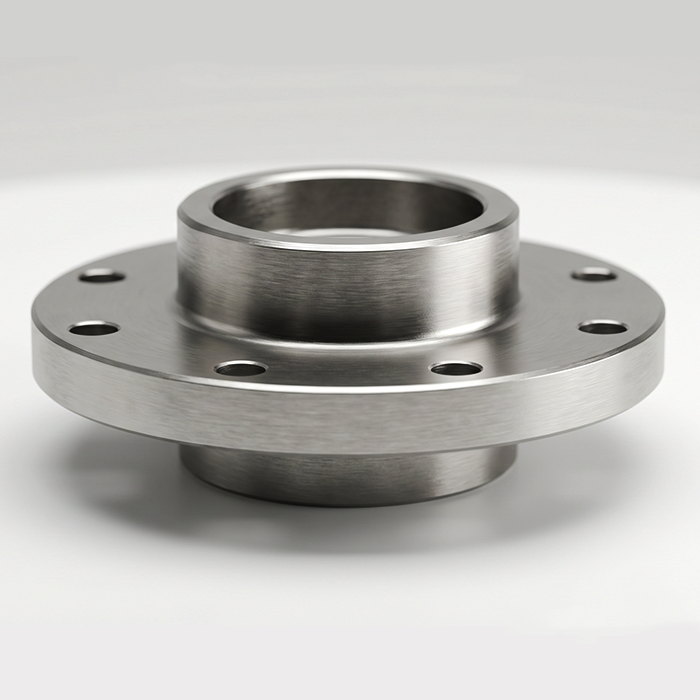
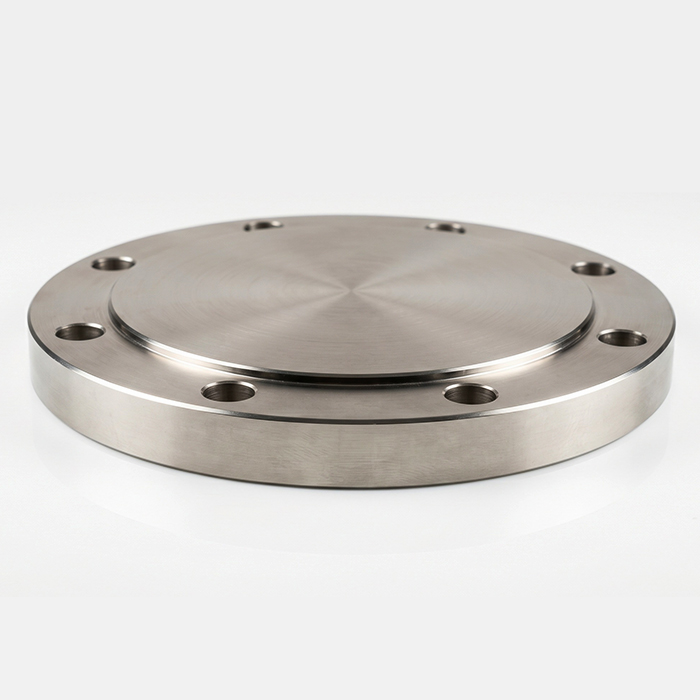
- What is Titanium Flange | ASME B16.5 ASTM B381 Gr2 Gr5 Titanium Flan
- ASME B16.5 Titanium Flange Grade2 DN100-DN600 Class150/300 FOB
- Gr2 Titanium Sheet Price FOB Shanghai | ASTM B265 In Stock
- Titanium Price Today (Oct 26, 2026): China Market Report
- Titanium Price Today (23 Oct 2026): Plate, Tube, Rod & Wire
Contact Person: Wang Xiaoning
Tel: +86-917-355-7966
Email: sales@sxqytd.com
WhatsApp: +86 188 2967 9311
Company: Shaanxi Qianyi Tuoda Technology Co., Ltd
Address: Floor 4, Building 4, No. 188 Gaoxin Avenue, High-tech Zone, Baoji City, Shaanxi Province, China