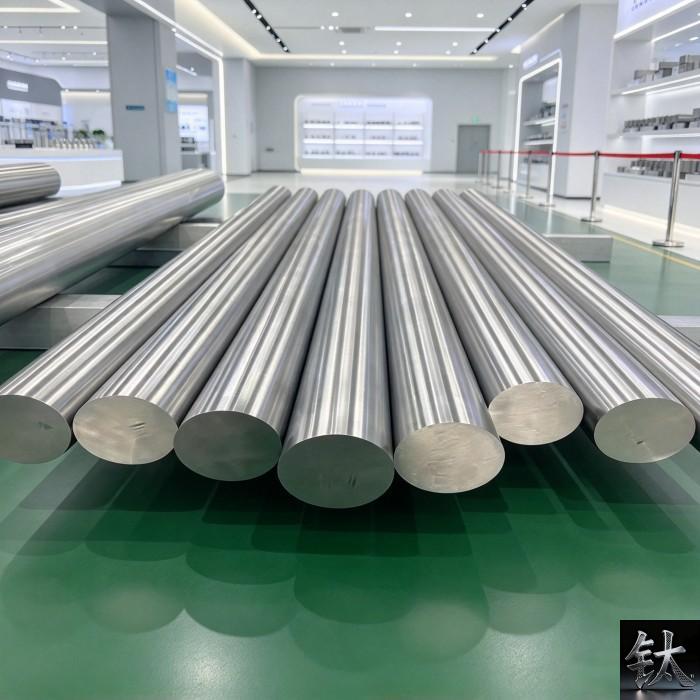
Gr5 vs Gr23 Titanium: Which Grade to Specify
| Specification | Ti-6Al-4V (UNS R56400 / R56407) |
|---|---|
| Applicable Standard | Gr5 / Gr23 (Ti-6Al-4V / ELI) |
| Material Condition | titanium alloy grade selection |
| Inspection & Packaging | ASTM F136 / B265 / B348 |
Product Description: Gr5 vs Gr23 titanium: same Ti-6Al-4V alloy, but Gr23 ELI's lower oxygen gives 30-40% higher fracture toughness for implants and cryogenic. How to specify each.(159/160 ✓)
Product Overview
Gr5 vs Gr23 Titanium: Which Grade to Specify
Grade 5 and Grade 23 are the same titanium alloy — Ti-6Al-4V — separated by a single number: the maximum oxygen content. Gr5 allows 0.20% oxygen; Gr23 (the ELI, "Extra Low Interstitial" version) limits it to 0.13%. That 0.07% difference does not change strength much, but it raises fracture toughness by roughly 30-40% and is what makes Gr23 the only grade you can legally put inside a human body. For most structural aerospace and industrial parts, Gr5 is the right default; for implants, cryogenic vessels and any fracture-critical cyclic-load part, specify Gr23 (ASTM F136). This guide gives you the chemistry, the strength-vs-toughness trade, the eight ways the Ti-6Al-4V family actually fails, and a specification rule you can hand to a mill.
At a Glance: Gr5 vs Gr23 Titanium Specification
| Spec | What to Specify |
|---|---|
| Base alloy | Ti-6Al-4V (6% Al, 4% V), alpha-beta, both grades |
| Gr5 (R56400) | O ≤ 0.20%, Fe ≤ 0.30%; ASTM B265/B348/B338/B381, AMS 4911/4928 |
| Gr23 ELI (R56407) | O ≤ 0.13%, Fe ≤ 0.25%, C ≤ 0.05%, N ≤ 0.03%; ASTM F136/F1472, ISO 5832-3 |
| Strength | Gr5 UTS ≥ 895 / YS ≥ 828 MPa; Gr23 UTS ≥ 860 / YS ≥ 795 MPa |
| Fracture toughness | Gr23 K_IC 80-110 vs Gr5 55-80 MPa√m (≈30-40% higher) |
| Corrosion | Essentially identical (same TiO2 film); both immune in seawater |
| Use Gr5 for | Airframes, engine parts, fasteners, industrial, marine |
| Use Gr23 for | Implants, cryogenic tanks, fracture-critical aero, low-temp |
| Density | 4.43 g/cm³ (both); the choice is about toughness, not weight |
What Gr5 and Gr23 Actually Are
Both grades are Ti-6Al-4V, an alpha-beta titanium alloy with about 6% aluminium (alpha stabiliser) and 4% vanadium (beta stabiliser), balance titanium. The beta transus — the temperature above which the alloy becomes fully beta — is about 995°C, and aluminium and vanadium are identical between the two specifications. What differs is only the interstitial chemistry: the tiny atoms (oxygen, nitrogen, carbon, hydrogen, iron) that sit in the spaces between the larger titanium atoms. Standard Gr5 (UNS R56400) is the general-purpose workhorse; Gr23 ELI (UNS R56407) is the refined, low-interstitial version written for surgical implants and cryogenic hardware.
Thinking of them as two different alloys is the first mistake buyers make. They are one alloy at two purity levels. That single fact drives everything else in this article: same density, same corrosion film, near-identical strength — and a toughness gap that decides life-or-death applications.
Why does interstitial control matter so much at the atomic scale? Oxygen and nitrogen sit in the octahedral gaps of the titanium lattice and pin dislocation motion - that is how they strengthen the metal, but the same pinning also makes cracks propagate more easily once they start. ELI melting strips those atoms back down, so the lattice can yield locally and blunt a crack tip instead of letting it run. For a static bracket that never sees a notch, the strength is what you want; for a part living under millions of cycles next to a defect, the toughness is what keeps it alive.
The “More Corrosion-Resistant” Myth
The most common reason engineers over-specify Gr23 is the belief that it "corrodes less" than Gr5. It does not. Both grades form the same self-healing TiO₂ passive film, and in seawater, brine, most acids and oxidising environments their corrosion behaviour is effectively identical. Gr23 was not created for corrosion resistance — it was created for fracture toughness, fatigue life and biocompatibility. If your failure mode is corrosion, the grade choice between Gr5 and Gr23 will not save you; a palladium-added grade such as Gr7 would, and the right call there is a Gr2-vs-Gr5 type review, not Gr23.
Specifying Gr23 purely for "better corrosion" spends 15-30% more per kilogram for a property you already have in Gr5. Reserve Gr23 for the jobs where toughness, fatigue or a medical standard actually demands it — which is the rest of this article.
There is a cheaper way to see the myth in practice: ask a supplier "is Gr23 more corrosion resistant?" If they say yes without qualification, they are selling purity as corrosion. The honest answer is that for a seawater pump impeller, Gr5 and Gr23 will corrode at the same rate; the reason you might still choose Gr23 there is fatigue from cavitation and vibration, not rust. Keep the two questions separate and you will stop overpaying.
The 0.07% That Changes Everything: Interstitial Chemistry
Oxygen is a potent solid-solution strengthener in titanium: each 0.01% of oxygen adds roughly 8-10 MPa of tensile strength but costs about half a point of elongation and, far more importantly, lowers fracture toughness. By cutting oxygen from 0.20% to 0.13%, Gr23 gives up about 35 MPa of static strength and gains 30-40% in fracture toughness and a better fatigue-crack-growth threshold. In a part that fails by slow crack growth — an implant, a cryogenic fitting, a vibrating aero bracket — that trade is decisively in Gr23’s favour.
| Element (max) | Gr5 (ASTM B348) | Gr23 ELI (ASTM F136) |
|---|---|---|
| Oxygen (O) | 0.20% | 0.13% |
| Iron (Fe) | 0.30% | 0.25% |
| Carbon (C) | 0.08% | 0.05% |
| Nitrogen (N) | 0.05% | 0.03% |
| Hydrogen (H) | 0.015% / 0.012%* | 0.015% / 0.012%* |
| Aluminium / Vanadium | 5.5-6.75 / 3.5-4.5 | 5.5-6.5 / 3.5-4.5 |
* bar / sheet respectively. Note the only changed elements are the interstitials — the alloy itself is unchanged.
One practical note for buyers: the interstitial limits are checked on the melt certificate, not by eye. When you receive AMS 4928 Gr5 bar or F136 Gr23 bar, confirm the actual O, Fe, C and N values against the called specification rather than trusting the grade name. A certificate showing 0.18% oxygen on "ELI" material is out of spec and must be rejected before it enters an implant supply chain.
Mechanical Properties: Strength vs Toughness
In the annealed condition, Gr5 holds a slight static-strength edge because of its higher oxygen; Gr23 answers with toughness and ductility. Both are heat-treatable to much higher strength (solution treat and age), but the relative ranking holds: Gr5 a little stronger, Gr23 markedly tougher.
| Property (annealed) | Gr5 (Ti-6Al-4V) | Gr23 (Ti-6Al-4V ELI) |
|---|---|---|
| Tensile strength | ≥ 895 MPa | ≥ 860 MPa |
| Yield strength | ≥ 828 MPa | ≥ 795 MPa |
| Elongation (4D) | ≥ 10% | ≥ 10% (often 14-16%) |
| Fracture toughness K_IC | 55-80 MPa√m | 80-110 MPa√m |
| Density | 4.43 g/cm³ | 4.43 g/cm³ |
The number that matters for safety-critical parts is K_IC. A lower-toughness material with a sharp notch or a small defect can fail in a brittle, catastrophic way even when its tensile strength looks fine. Gr23’s higher K_IC and better fatigue-crack-growth threshold are why it is specified where a failure cannot be tolerated. For a deeper look at the alloy family, see our Gr1-Gr2-Gr5-Gr7-Gr12 grade guide.
Heat treatment changes the absolute numbers but not the ranking. Solution-treated-and-aged Ti-6Al-4V can reach tensile strengths well above 1,100 MPa, and Gr23 still trails Gr5 by a similar small margin while keeping its toughness lead. For buyers, the takeaway is to specify the condition (annealed, STA) explicitly: an annealed bar and an STA bar of the same grade are different products with different allowable stresses.
Corrosion Resistance: Where the Two Grades Are Identical
Because both grades share the same titanium surface, their corrosion resistance is the same across the board: excellent in seawater and brine, resistant to most oxidising and many reducing acids, and immune to chloride pitting and crevice attack in normal service. Neither grade is the answer if your real problem is reducing acid or hot chloride crevice — for that you move to a palladium or molybdenum alloyed grade, not to Gr23. The practical takeaway: pick Gr5 or Gr23 on mechanical and regulatory grounds (strength, toughness, implant standard, low temperature), never on corrosion grounds, because on corrosion they tie.
To put the "identical corrosion" claim to rest with a concrete case: in ASTM G31 immersion tests and in decades of marine service, Gr5 and Gr23 plates show the same weight-loss trend in neutral seawater, the same freedom from pitting, and the same resistance to crevice attack at moderate temperature. The only corrosion edge either grade has is shared. If your environment is reducing acid or hot concentrated chloride, both need help from a different alloy - see our Gr2 vs Gr5 guide for the pure-grade logic.
Limitations & Failure Modes
The Ti-6Al-4V family does not fail by uniform corrosion — it fails by environmental and mechanical mechanisms. Listed by condition so you can map each to your own part:
Hydrogen Embrittlement
Hydrogen picked up during pickling, plating, or cathodic over-protection diffuses into titanium and forms brittle hydrides. Keep hydrogen within spec (and beware over-aggressive cathodic protection); weld and clean under proper argon shielding so no hydrogen is absorbed. The classic warning sign is a discoloured, contaminated weld.
Stress Corrosion Cracking in Specific Media
Ti-6Al-4V is immune to SCC in seawater and most chlorides, but it can crack in a short list of specific environments: hot chloride salt deposits above roughly 290°C (engine hot sections), methanol (especially with halide contamination), red fuming nitric acid, and nitrogen tetroxide (N₂O₄). Avoid these media or apply proven qualified procedures; do not assume "titanium = corrosion-proof" in every chemistry.
The Galling & Fretting Trap
Titanium galls and seizes against itself and against steel when sliding under load without lubrication. Threaded Gr5 fasteners and press-fit joints are the usual victims, and the resulting surface damage becomes a fatigue-initiation site. Use anti-galling coatings, proper lubricants, controlled torque, and avoid titanium-on-titanium sliding where you can.
The High-Temperature Wall
Above about 400-450°C in air, titanium forms an oxygen-enriched brittle "alpha case" surface layer and loses strength; above the ~995°C beta transus the microstructure coarsens and ductility drops. Keep continuous service below these limits, and if the part is heat-treated, never exceed the qualified temperature band. The grade (Gr5 vs Gr23) does not change this wall — both share it.
The Titanium Fire / Combustion Risk
In pure or high-pressure oxygen, or under severe frictional heating with ignition, titanium can burn spectacularly. This is a system-design hazard, not a grade difference, but it matters for aerospace engine and oxygen-service hardware: control oxygen concentration, avoid rubbing contacts, and follow oxygen-cleanliness and ignition-mitigation procedures.
The Notch-Sensitivity Trap (Why Gr5 Can Fail Where Gr23 Will Not)
This is the core reason Gr23 exists. Under cyclic loading with a sharp notch, a fillet, or a small casting/forging defect, standard Gr5’s lower fracture toughness lets a microscopic crack propagate to sudden failure. Gr23, with 30-40% higher K_IC and a better fatigue threshold, deforms and arrests the crack instead. For implants, cryogenic fittings and fracture-critical aero parts, that margin is what the standard demands — specify Gr23, not Gr5.
The Substitution Liability
A drawing that calls out ASTM F136 (or ISO 5832-3) for an implant cannot be satisfied by Gr5, and an aerospace drawing to AMS 4911 cannot be quietly swapped to Gr23 without a qualified deviation. Substitution changes allowable stress, minimum design metal temperature and welding procedure qualification. Always match the purchase order to the called-out specification, revision and condition — do not let a stock list pick the grade.
Where Corrosion Is NOT the Problem
Because both grades are corrosion-equal, do not "upgrade" to Gr23 expecting corrosion relief — you pay the premium and get no corrosion benefit. The valid upgrade triggers are toughness, fatigue, biocompatibility and low-temperature ductility only. If corrosion is genuinely your limit, step to a different alloy system entirely rather than to Gr23.
Medical, Aerospace and Cryogenic Applications
Medical — Gr23 owns the implant shelf. Surgical implants (hip stems, knee and spine components, bone plates, screws, dental parts) are specified to ASTM F136 (or ISO 5832-3), which is an ELI specification. The lower iron reduces long-term metallic-ion release and tissue reaction; the higher toughness resists crack growth under the 1-3 million load cycles a hip sees per year over a 15-20 year service life. Our medical-implant-grade-23 bar is stocked for exactly this. Gr5 (ASTM F1472) is acceptable only for less critically loaded implant items such as some dental and external-fixation components.
Aerospace — the grades split by duty. Gr5 dominates general airframe structure, engine hardware and fasteners where maximum strength-to-weight wins. Gr23 is pulled in for fracture-critical joints, engine-side parts under high-cycle vibration, and cryogenic tanks and piping, where its toughness and low-temperature ductility prevent brittle failure. Both are covered in our aerospace applications page; the medical applications page covers the implant side.
Biocompatibility is the other half of the medical story. Titanium’s modulus is closer to bone than cobalt-chrome or stainless steel, which reduces "stress shielding" - the bone weakening that happens when a stiff implant carries too much load. Grade 23’s lower iron further reduces the risk of adverse tissue reactions over a multi-decade implant life. That is why medical-grade plate and bar are almost always ELI chemistry, and why regulatory filings name F136 by number, not by "titanium alloy."
Standards and Substitution Rules
Specify the grade by the standard your industry recognises. Gr5: ASTM B265 (plate/sheet/strip), B348 (bar/billet), B338 (tube), B381 (forgings), and aerospace AMS 4911 / AMS 4928. Gr23 ELI: ASTM F136 (implant bar), F1472 (implant wrought), ISO 5832-3, with B348/B265 also used for the bar and plate forms. You can usually substitute Gr23 upward into a Gr5 role (it meets or exceeds the mechanical minimums while adding toughness), but you may not substitute Gr5 down into an F136 implant role — the standard simply does not permit it. Always state product form, condition, mechanical requirements and acceptance tests on the purchase order.
The substitution rule has a commercial edge too. Because Gr23 meets Gr5 mechanical minimums, designers sometimes specify Gr23 across the board "to be safe" - but that adds cost to every non-critical part. The disciplined approach is to specify Gr5 as the baseline and call out Gr23 only on the drawings where fracture criticality or an implant/cryogenic standard demands it. That keeps the bill of materials honest and the audit trail clean.
Machining, Welding and Cost
Both grades machine similarly — titanium does not dissipate heat, so use rigid setups, sharp solid-carbide tools, moderate surface speed and high feed, with through-tool coolant. Gr23’s slightly lower interstitials give a marginally finer response, but the shop-floor practice is the same. Welding is by GTAW/PAW with strict argon shielding; the lower interstitials of Gr23 reduce the risk of weld-zone embrittlement, so it is the safer choice for welded implant or cryogenic assemblies. Cost: Gr23 carries a 15-30% premium over Gr5 because of tighter melt control (often double/triple vacuum-arc remelting) and lower yields. Spend it only where toughness, fatigue or the implant standard demands it; for a plain structural bracket, Gr5 is the economical call.
On lead time: Gr5 mill products are widely stocked in plate, bar and tube forms and turn fast; Gr23, especially F136 bar and medical plate, is a tighter, qualification-heavy supply line, so plan lead time accordingly for implant programs. For prototypes, buying certified Gr23 stock and having it machined is usually faster than waiting on a custom melt.
On joining the two grades: Ti-6Al-4V is welded with matching or ER Ti-6Al-4V filler under a full inert blanket, and Gr23 can be welded to Gr5 because the chemistry overlap is large - the joint will sit between the two on toughness, so keep the weld in a low-stress region. A post-weld stress-relief anneal restores ductility and drives out hydrogen picked up during the arc. For implant or cryogenic assemblies, specify Gr23 filler and qualify the procedure so the weld zone keeps its low-interstitial character.
Summary: How to Specify Gr5 or Gr23
Decide from the failure mode, not the price list. If the part carries high static load and weight is critical — an airframe bracket, an engine part, a marine fitting — Gr5 is the default. If the part faces cyclic loading, low temperature, human tissue, or any duty where a sudden crack is unacceptable, specify Gr23 to ASTM F136. They are the same alloy; the 0.07% oxygen difference is the entire decision, and it is a toughness decision, not a corrosion one.
Choose Gr23 ELI if ✓ it is a surgical implant (ASTM F136 required) ✓ service is cryogenic or low-temperature ✓ the part is fracture-critical or high-cycle ✓ biocompatibility and long-term ion release matter.
Choose neither on corrosion grounds ✓ Gr5 and Gr23 tie on corrosion ✓ for reducing-acid / hot-crevice risk, step to Gr7 or Gr12 instead.
Ready to quote? Tell us the standard (B265/B348/B338 or F136), product form, condition, sizes and quantity. We stock Gr5 bar and Gr5 Ti-6Al-4V stock, and supply Gr23 ELI medical bar with MTC. Request a quote →
As a concrete specification line: "Material: Ti-6Al-4V ELI, ASTM F136, UNS R56407, annealed, with MTR showing O ≤ 0.13%, Fe ≤ 0.25%; product form bar 25 mm dia × 300 mm; for orthopedic implant component." That single line removes ambiguity, forces the mill to certify the interstitials, and gives your incoming inspection an exact check. For a non-medical bracket, swap F136 for AMS 4928 and the grade to R56400 - and watch the cost drop.
Frequently Asked Questions
What is the difference between Grade 5 and Grade 23 titanium?
They are the same Ti-6Al-4V alloy. Grade 5 (UNS R56400) allows up to 0.20% oxygen and 0.30% iron; Grade 23 ELI (UNS R56407) limits oxygen to 0.13% and iron to 0.25%, with tighter carbon and nitrogen. The lower interstitials give Grade 23 about 30-40% higher fracture toughness and better fatigue life, at a slight loss of static strength.
Is Grade 23 more corrosion resistant than Grade 5?
No. Both grades form the same self-healing titanium oxide film, so their corrosion resistance in seawater, brine and most acids is essentially identical. Grade 23 was developed for fracture toughness, fatigue life and biocompatibility, not for better corrosion. If corrosion is your real limit, you need a different alloy such as a palladium or molybdenum grade, not Grade 23.
Which grade should I use for a surgical implant?
Use Grade 23 (Ti-6Al-4V ELI) certified to ASTM F136 or ISO 5832-3. Implant standards require the extra-low-interstitial chemistry for toughness and long-term biocompatibility. Grade 5 does not meet the implant specification; Grade 23 is the only one of the two you can legally put inside the body.
Can I substitute Grade 5 for Grade 23?
Usually you can substitute Grade 23 upward into a Grade 5 role, because it meets or exceeds the mechanical minimums while adding toughness. You cannot substitute Grade 5 down into a Grade 23 / ASTM F136 implant role - the standard does not permit it. Any substitution that changes allowable stress, minimum design temperature or welding procedure must go through a qualified deviation.
Why is Grade 23 preferred for cryogenic service?
The lower interstitial content preserves ductility and fracture toughness at low temperature, where standard Grade 5 can become more notch-sensitive and brittle-prone. For cryogenic tanks, piping and fittings, Grade 23's higher toughness prevents sudden crack growth, which is why it is specified for that duty.
What standards cover Grade 5 and Grade 23?
Grade 5 is covered by ASTM B265, B348, B338 and B381 for mill products, and AMS 4911 / AMS 4928 for aerospace. Grade 23 ELI is covered by ASTM F136 and F1472 for implants, ISO 5832-3, and also supplied as B265/B348 bar and plate. Always name the product form, condition and acceptance tests on the purchase order.
How much more does Grade 23 cost than Grade 5?
Grade 23 typically carries a 15-30% premium over Grade 5 because of tighter melt control, often double or triple vacuum-arc remelting, and lower production yields. Spend it only where toughness, fatigue or the implant standard requires it; for ordinary structural parts Grade 5 is the economical choice.
Tell us your requirement — grade, size and quantity. We reply within 24 hours.
Prefer chat? WhatsApp +86 188 2967 9311 or email sales@sxqytd.com.
- What is Titanium Flange | ASME B16.5 ASTM B381 Gr2 Gr5 Titanium Flan
- ASME B16.5 Titanium Flange Grade2 DN100-DN600 Class150/300 FOB
- Gr2 Titanium Sheet Price FOB Shanghai | ASTM B265 In Stock
- Titanium Price Today (Oct 26, 2026): China Market Report
- Titanium Price Today (23 Oct 2026): Plate, Tube, Rod & Wire
Contact Person: Wang Xiaoning
Tel: +86-917-355-7966
Email: sales@sxqytd.com
WhatsApp: +86 188 2967 9311
Company: Shaanxi Qianyi Tuoda Technology Co., Ltd
Address: Floor 4, Building 4, No. 188 Gaoxin Avenue, High-tech Zone, Baoji City, Shaanxi Province, China